Free shipping across the US · Art prints, canvas and framed art · Made to order · Damaged or misprinted? Free reprint within 30 days · Join the list and a piece for your phone is on us · Free shipping across the US · Art prints, canvas and framed art · Made to order · Damaged or misprinted? Free reprint within 30 days · Join the list and a piece for your phone is on us · Free shipping across the US · Art prints, canvas and framed art · Made to order · Damaged or misprinted? Free reprint within 30 days · Join the list and a piece for your phone is on us ·
In My Words
Prof. Bassem Khafagy on the work: abstract images between thought and feeling, how they are made with digital and AI-assisted tools, and art for every wall.
BASSEM.ART · IN MY WORDS
Between thought and feeling
What I look for, why the work looks the way it does, and what I hope it does on your wall.
00 · In brief
The statement, in a breath
I make abstract images in the spaces between thought and feeling, presence and memory, place and soul. For four decades I studied the weight of knowledge; today I explore its color.
I work with digital and AI-assisted tools, and every choice about what stays is mine. I share what I like, as fine art prints made to order, priced so they can live on ordinary walls.
The work does not try to explain or impress. It tries to stay: a quiet companion, for anyone who feels before they explain.
Prof. Bassem Khafagy

01 · What the work explores
The spaces between things
My work lives in the spaces between things. Between thought and feeling. Between presence and memory. Between place and soul. Between order and chaos, and the balance they find when neither wins.
I am less interested in how the world looks than in how it is felt: inwardly, emotionally, and over time. Every piece begins with a question. What if these colors met this way? What if structure and chaos found their balance here? Some questions lead to answers worth sharing. Those are the pieces you see.
- Thought and feeling
- Presence and memory
- Place and soul
- Order and chaos
- Silence and light
02 · Where it comes from
Life, places and souls
Life, places and human stories are my central influences. I have lived and worked across cultures, in the Middle East, in Europe and in the United States, and I have learned that places do more than shape landscapes. They shape inner worlds.
Traces of cities, journeys, silence, faith, loss and hope surface in the work. Not as symbols to decode, but as atmospheres to feel.
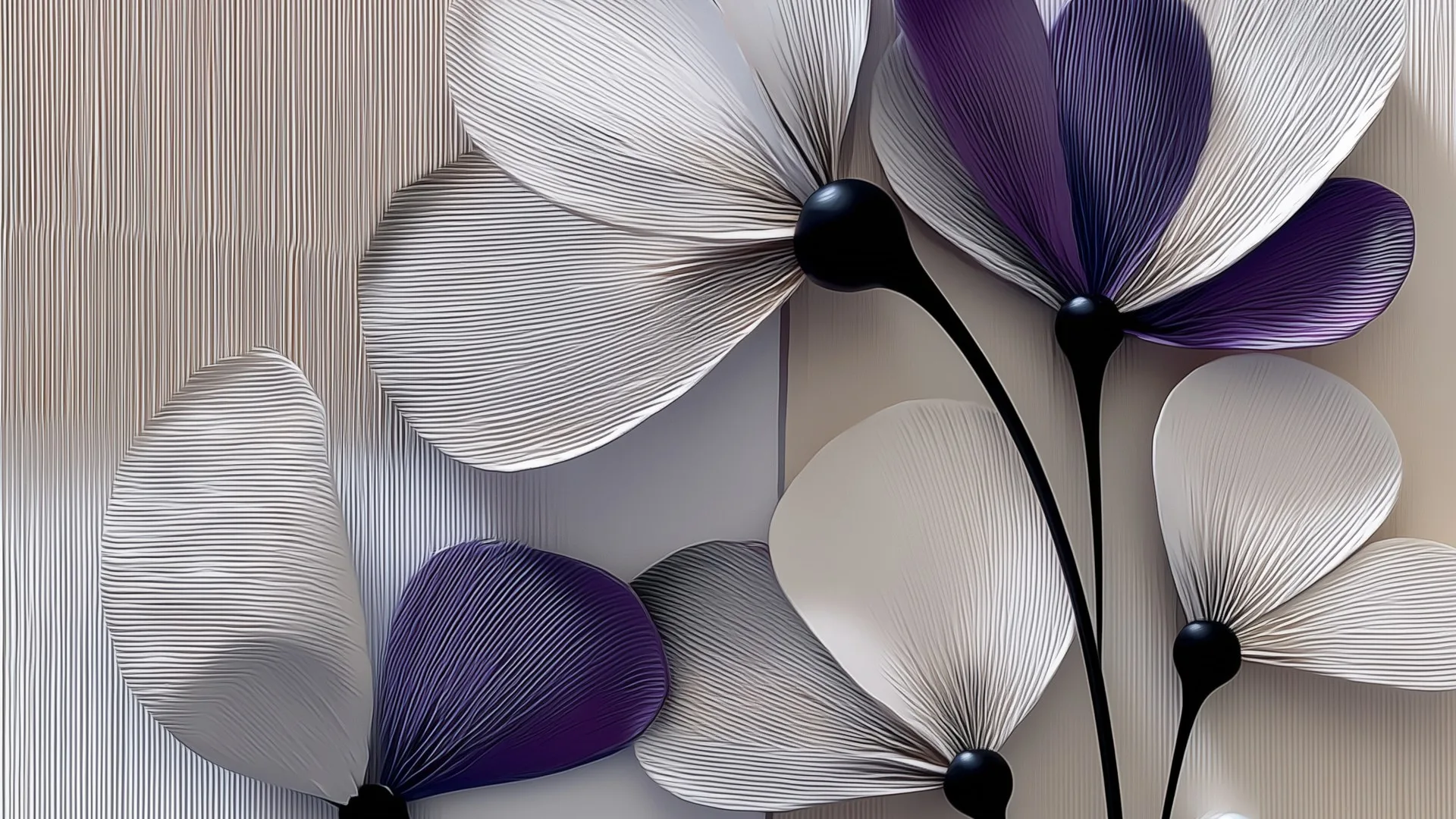
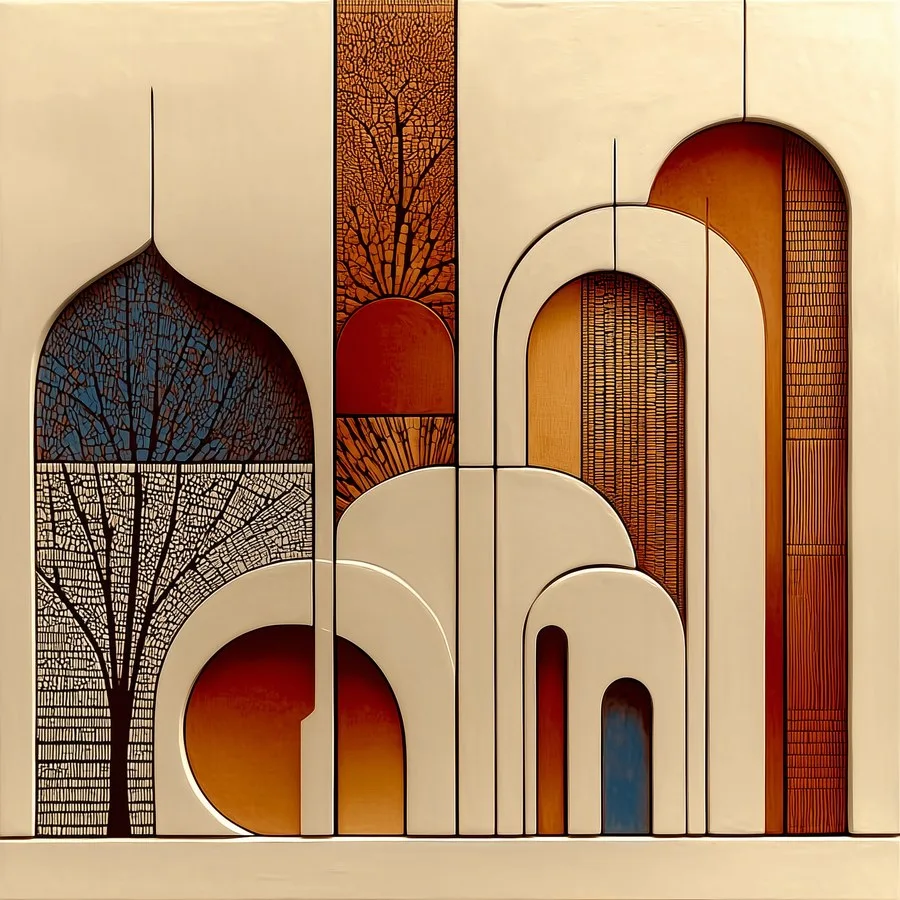
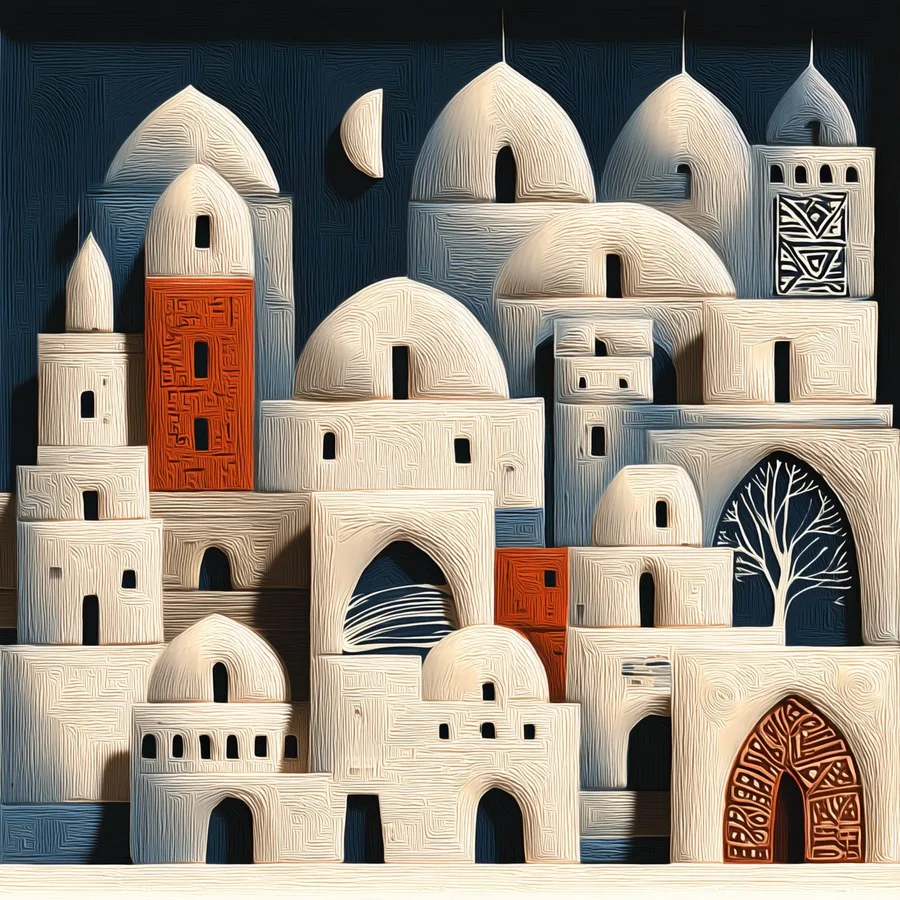
A few forms keep returning:
01
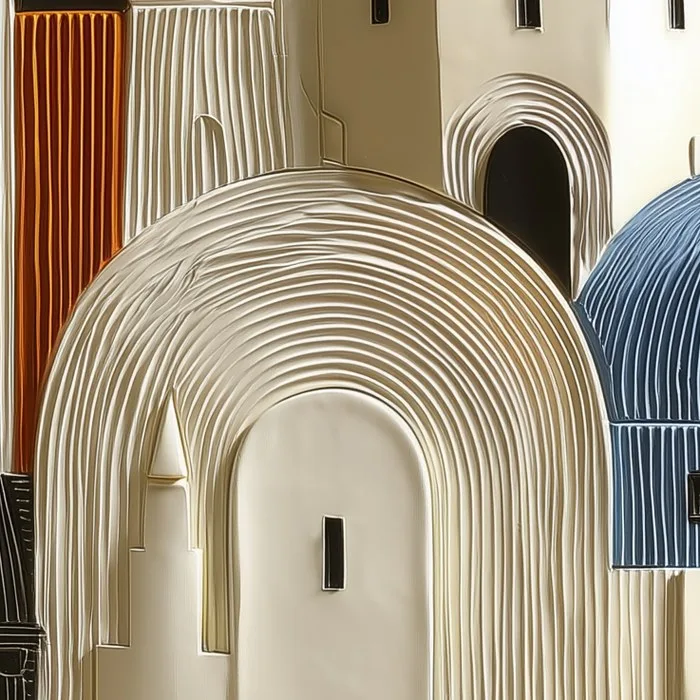
Stone
Arches, doorways and old walls that seem to remember everyone who passed through them.

02
Light
The late golden hour, and what light leaves behind on a wall after it has moved on.
03
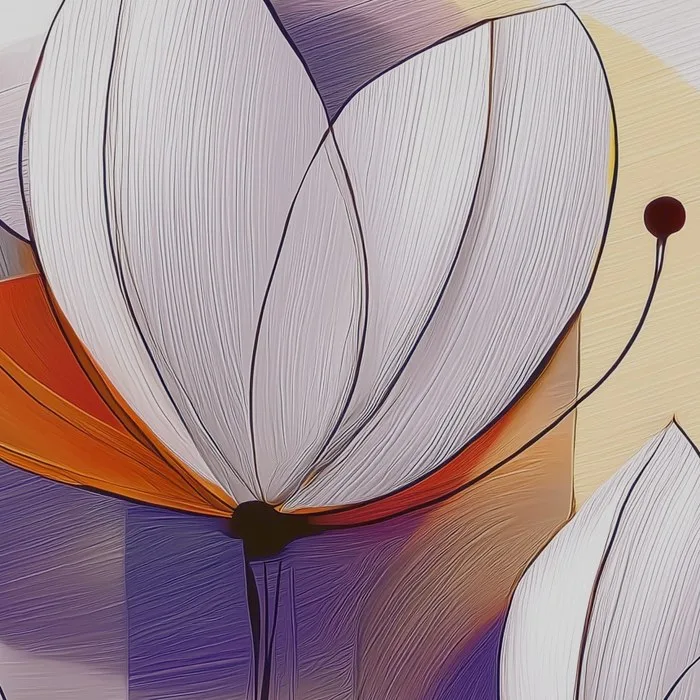
Bloom
Flowers not as they grow in a garden, but as they live in memory.

04
Line
The weight of a single line, and the silence around it.
03 · Why abstraction
Honesty without explanation
I work mostly in abstract forms because abstraction allows honesty without explanation. It removes the noise of literal pictures and opens a quieter, more personal space, where you are free to bring your own meaning.
I do not make answers. I try to make spaces where questions can breathe. A piece may say something different to you than it says to me, and something different again in five years. That is not a flaw in the work. It is the work.
I create art because it is how I listen to the world.

04 · Words and colors
Two languages

For most of my life, I trusted words. I built a career on them. But language has edges, and there are textures of thought and feeling that refuse to fit inside a sentence, however carefully it is made.
Color became my second language. I learned it the way anyone learns a new tongue: a few words at first, then grammar, then, slowly, the ability to think in it. Some of what I know about the world, I can write. Some of it I can only make visible.
That is why I often pair a piece with a few lines of reflection. Not to explain it, but to open another door to it.
Words alone are not enough for me. Colors alone are not enough either. Both are the way to go.

Words alone are not enough
Colors alone are not enough either
05 · The process
Intuitive, yet deliberate
I work with artificial intelligence and digital tools, and I treat them as instruments. They respond to my direction, my judgment, and the many small decisions about color, form, balance and meaning. The algorithms do not create for me. I am the one choosing.
01
Begin with a thought
A palette, a question, a kind of light. The piece starts as an idea, never as an accident.

02
Let it reveal itself
Layers, textures and movement emerge. I embrace restraint and imperfection, and I let the work show me where it wants to go rather than forcing it toward a planned result.

03
Know when to stop
There is craft in knowing when to push further and when to stop, when to honor complexity and when to honor simplicity. Most of what I make is set aside. What remains is what I would hang on my own wall.
Each piece becomes a moment of pause: a meditation rather than a declaration.
The technology gave me a new vocabulary. But I’m the one speaking.
06 · Structure and freedom
The square, and the systems behind it
My years in education taught me to think in systems: to see patterns, and to understand how parts become a whole. That sensibility runs through everything I make. A composition, for me, is a small system. Change one color, one weight, one position, and everything else answers.
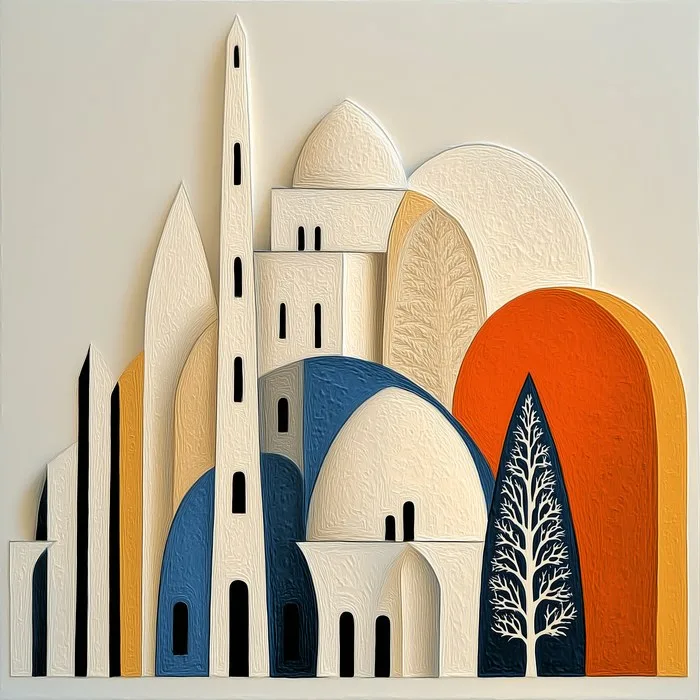
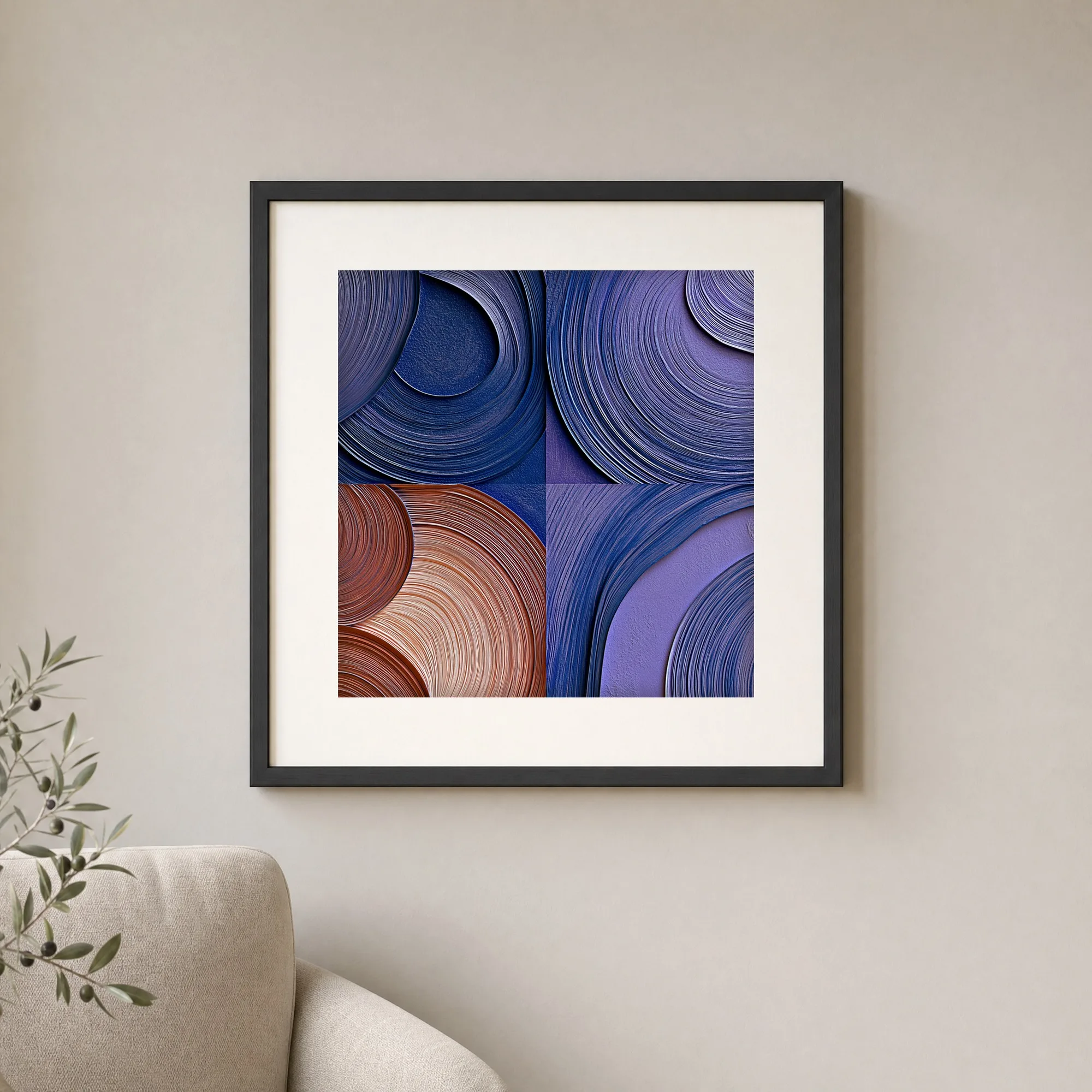
The square is where I feel this most. It has no dominant direction and no built-in hierarchy, so every bit of balance and tension must come from what lives inside it. Structure on the outside, freedom on the inside. It is the form that feels truest to me. That is my own feeling, not a rule, and many pieces are offered in other shapes too.



07 · For whom
For those who feel before they explain
I make this work for people who value depth over decoration and substance over speed, who like to stop and linger. When someone lives with a piece, I hope they feel they are meeting a thought, not merely a pattern.
And I make it for everyone. Art should not belong only to the wealthy. It should be affordable, and never cheap: within reach of people living ordinary lives, and made with care. I believe in the physical: a print you can hang and live with, a calm, grounded presence in a room.

08 · What I believe
What I believe
01
Every wall in this world deserves art.
02
Affordable, never cheap. Within reach, and made with care.
03
The tools do not make the work. The choices do.
04
Say plainly how the work is made.
05
Restraint is harder than abundance. Knowing what to leave out is most of the craft.
06
Meaning is not dictated. It is met, between what is made and who is looking.
07
Art does not need to shout. It needs to connect.
09 · The intention
Art that stays
My intention is simple: to create art that accompanies, rather than demands.
Art that does not rush, explain or impress, but stays.
If a viewer feels something before they understand the work, then it has already done what it was meant to do.
Prof. Bassem Khafagy
10 · In short
For press, curators and friends
Free to quote, with credit to Prof. Bassem Khafagy, Bassem.art.
In one sentence
Prof. Bassem Khafagy makes abstract images in the spaces between thought and feeling, and shares them as fine art prints so that every wall can hold art.
In fifty words
Prof. Bassem Khafagy, an engineer, professor and author, has made abstract images in quiet hours for forty years. Working with digital and AI-assisted tools that he directs and edits, he explores the spaces between thought and feeling, place and soul. Bassem.art shares the work as fine art prints, affordable, never cheap.
Written September 2026. Like the work, this statement will keep growing.
Art for every wall
