Free shipping across the US · Art prints, canvas and framed art · Made to order · Damaged or misprinted? Free reprint within 30 days · Join the list and a piece for your phone is on us · Free shipping across the US · Art prints, canvas and framed art · Made to order · Damaged or misprinted? Free reprint within 30 days · Join the list and a piece for your phone is on us · Free shipping across the US · Art prints, canvas and framed art · Made to order · Damaged or misprinted? Free reprint within 30 days · Join the list and a piece for your phone is on us ·

The Story
The person behind Bassem.art, and how the work is made: digital tools, AI-assisted generation, careful selection and finishing by Bassem.

BASSEM.ART · THE STORY
Words alone were not enough
Art made in quiet hours for forty years, a book that started something, and the day I decided to share more.
01 · The same person
Just showing more
By profession I am an engineer, a professor and an author. I have spent my working life building things meant to last: institutions, programs, books, and the teams that carry them. My life has run across several cultures and countries, and today I live and work on the Mediterranean coast.
For forty years, in the quiet hours, early in the morning and late in the evening, I have also made images. Abstract compositions that say what I sometimes cannot say in words. I kept them to myself, not for any reason worth defending. They were simply mine.
Now I want to share more. I am the same person I have always been. I am not trying to become someone new, or to play a part. I am sharing what I like, in the hope that some of it finds a place on your walls.
02 · The timeline
Four moments

Forty years
Quiet hours
Images made for myself, early mornings and late evenings, and a few printed for my own walls.

2010
A book
My images appeared in print for the first time, facing the pages of a book of my reflections. My name was not on them.
2026
Sharing
I began to share the work publicly.

September 2026
Bassem.art
A gallery for the work, open to anyone who finds meaning in it.
03 · How it began
“It has to be you”
In 2010 I was writing a book of short reflections, and the words were not enough. They said what I meant, but not how I felt. So I imagined an abstract image on the page facing each reflection: not an illustration, a companion.
I looked for someone who could make those images. I shared my writing, looked at portfolios, and waited for the spark. It never came, and not for lack of talent. I was asking for something impossible: someone else to see inside my mind.
A friend watched me struggle and said the sentence that changed everything:
No one will be able to express what you feel. It has to be you. Do it yourself.
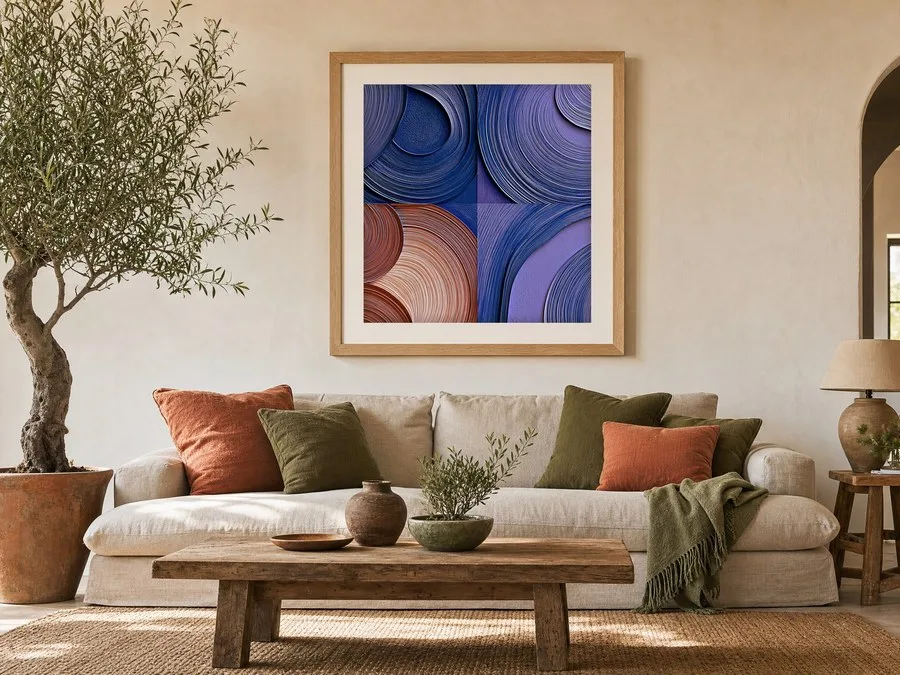
So I did. I kept making images after the book was done, learning to speak in color the way one learns a second language: badly at first, then a little better, every day. Some of them I printed for my own home, a large piece for the upper level, pairs for the walls of the dining room. Guests kept asking where they came from. Bassem.art is my answer.


Every wall in this world deserves art.
Prof. Bassem Khafagy
04 · Art for everyone
An art on every wall
I have never been able to live with empty walls.
In my first home, when money was scarce, I would go to small shops far from the expensive galleries, look for a long time, and choose the best piece I could afford. Then I would hang it. One wall at a time. Each piece made the room a little more mine.
Those days shaped a conviction I still carry: art should not belong only to the wealthy. It should be on every wall. Affordable, but never cheap. Affordable means within reach of people living ordinary lives. Cheap means made without care. Every piece here is priced with that younger man in mind, the one who refused to leave his walls empty.
It is for you. It was always for you.

05 · The making
Technology, without apology
I use artificial intelligence and digital tools to make my images. I say it plainly, because hiding it would suggest something that is not true: that the tools make the work less mine.
A camera does not take the photograph; the photographer does. In the same way, the tools respond to my direction: the theme, the palette, the light, and the thousands of small choices about what matters in a piece. Every decision about what to keep, what to push further and what to abandon is mine. Most of what I make is never shown. That choosing is where the work really happens.
How a piece reaches your wall:

01
The idea
Every piece begins with a thought: a question, a palette, a kind of light.

02
The making
I develop it with digital and AI-assisted tools, often through many versions of the same idea.
03
The choosing
The longest part. Most of what is made is set aside.
04
The finishing
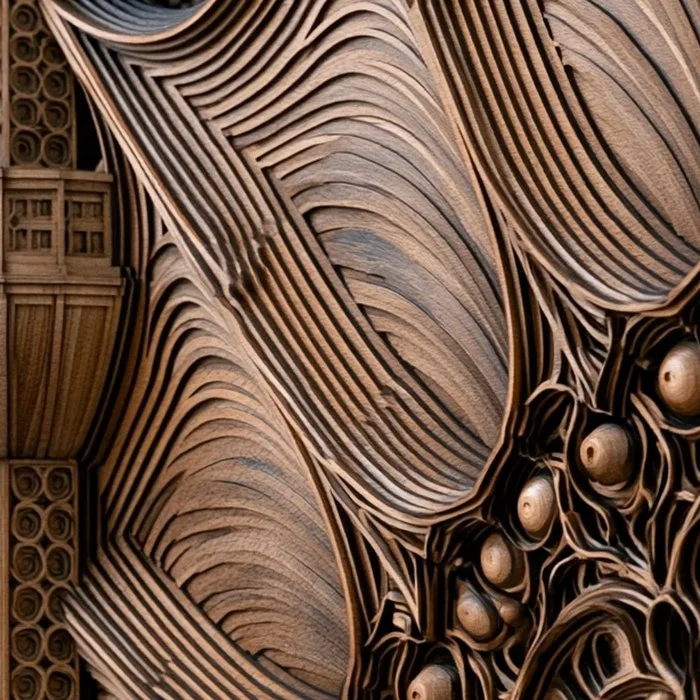
I refine what remains, detail by detail, and check it at full size until it holds together on a wall.

05
The print
Only then does it become a piece for your wall: an art print on textured watercolor paper, a gallery-wrapped canvas or a framed print, made to order and sent to you.
The technology gave me a new vocabulary. But I’m the one speaking.
06 · The square
Why I love the square
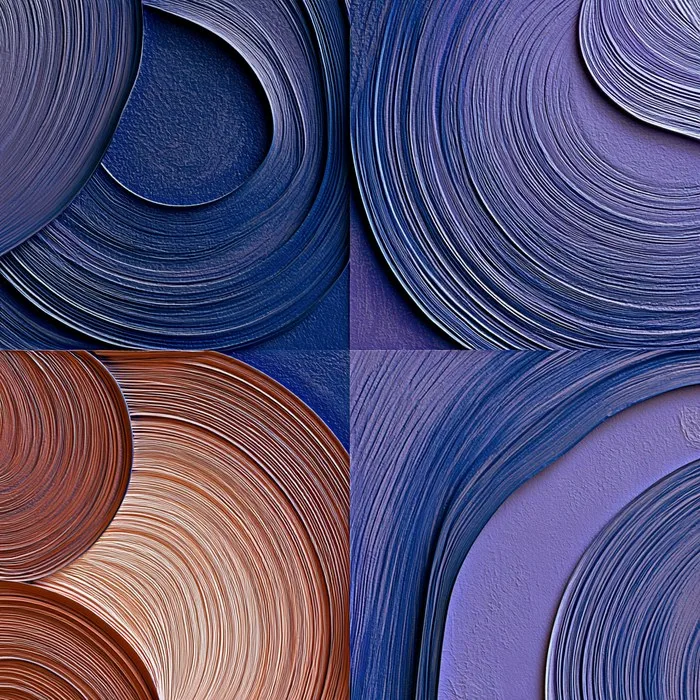
A rectangle tells your eye where to begin. A square does not. Width and height are equal, so every bit of balance and tension has to come from what lives inside it. For me, the square asks for honesty, and it has become the truest form I have found for what I make.
That is my own feeling, not a rule. Every wall and every eye is different, so many pieces are offered in other shapes too.



07 · Living with art
From decoration to companion
When you first hang a piece, you notice it every time you pass. Living with art begins later, quietly, when you no longer notice it every day but would notice at once if it were gone.
There is an abstract piece that has hung in the same place in my home for years. When I am thinking through a hard problem, my eyes rest on it in the pauses. It does not solve anything. It makes solving feel possible. That is what I hope each piece becomes in someone’s home: not decoration, but a quiet companion.

08 · The gallery
Why prints, and why now
I want the work in homes, not in folders. Printing to order makes that possible. Nothing is made that nobody wanted, every print is made fresh for the person who chose it, and each piece stays an open edition, available for as long as it hangs in the gallery.
Bassem.art is not a departure from my life’s work. It is the other half of a conversation I have been having with the world for forty years. Words and colors. Both are necessary.
This is my work. This is my story.
Prof. Bassem Khafagy


Words and colors. Both are necessary
Prof. Bassem Khafagy
09 · In My Words
What the work is about
The Story tells how the work came to be. In My Words, I say what it is about: the spaces between thought and feeling, the places and souls behind it, how it is made, and what I hope it does on your wall.
Art that accompanies, rather than demands.


Art for every wall